





Product Overview and Core Features
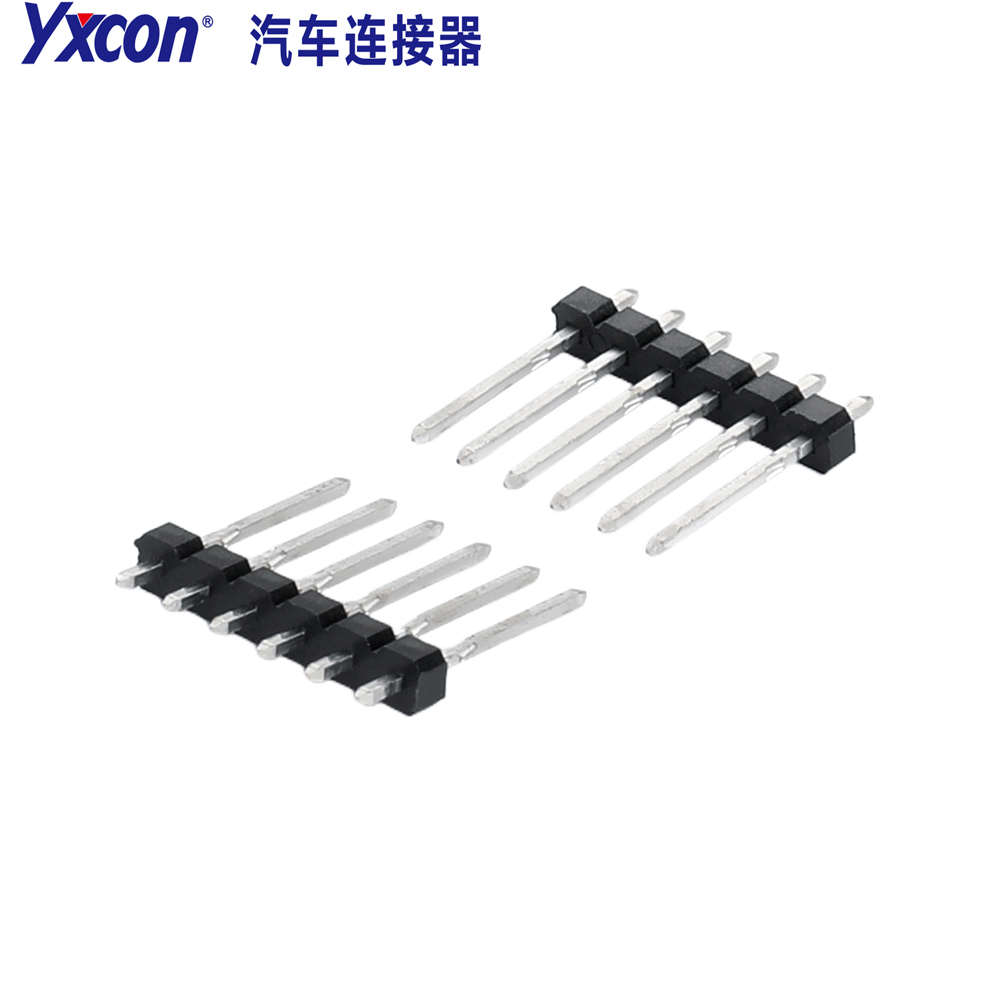
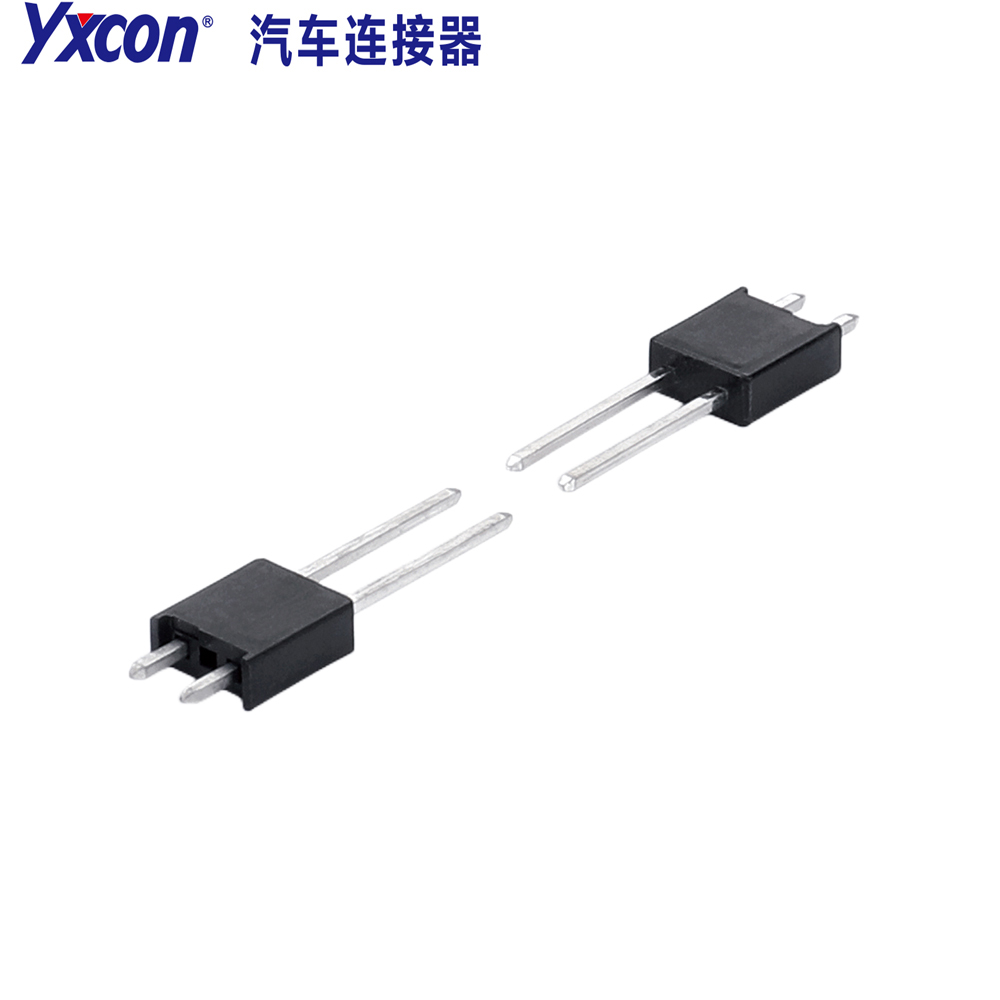
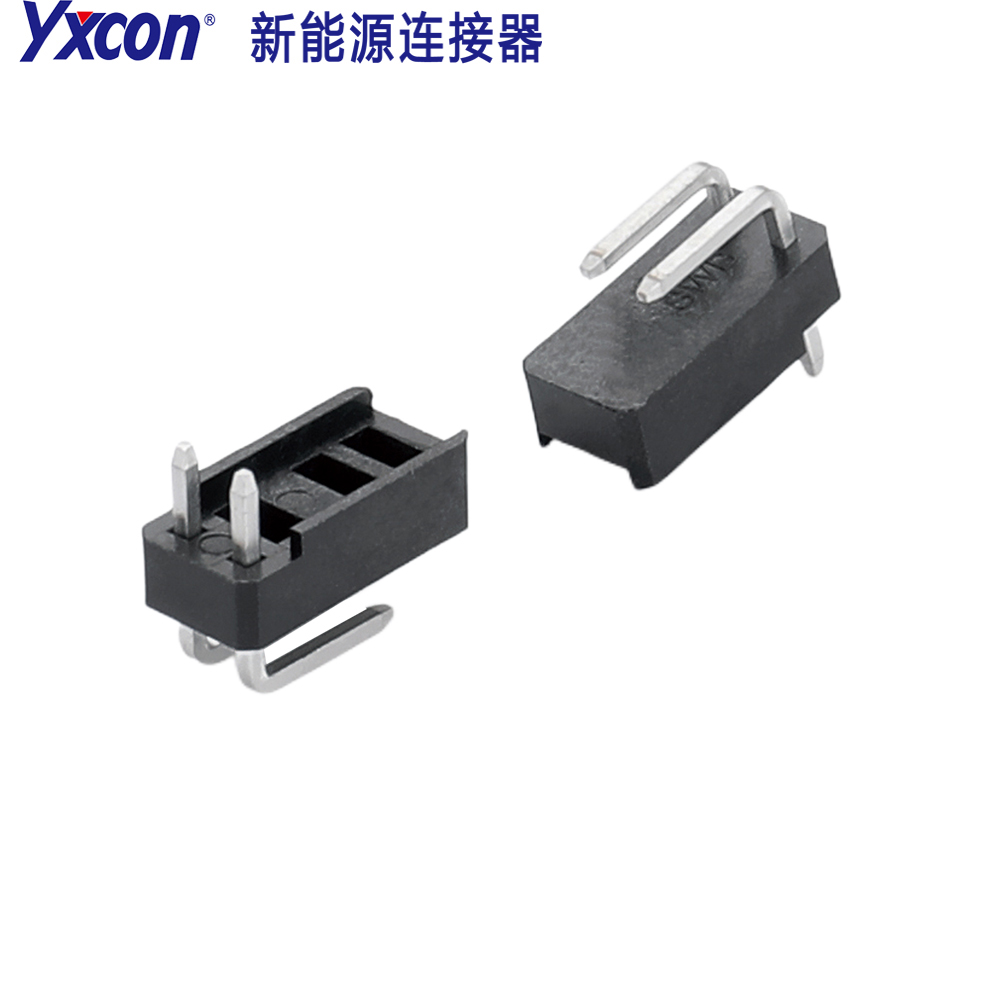
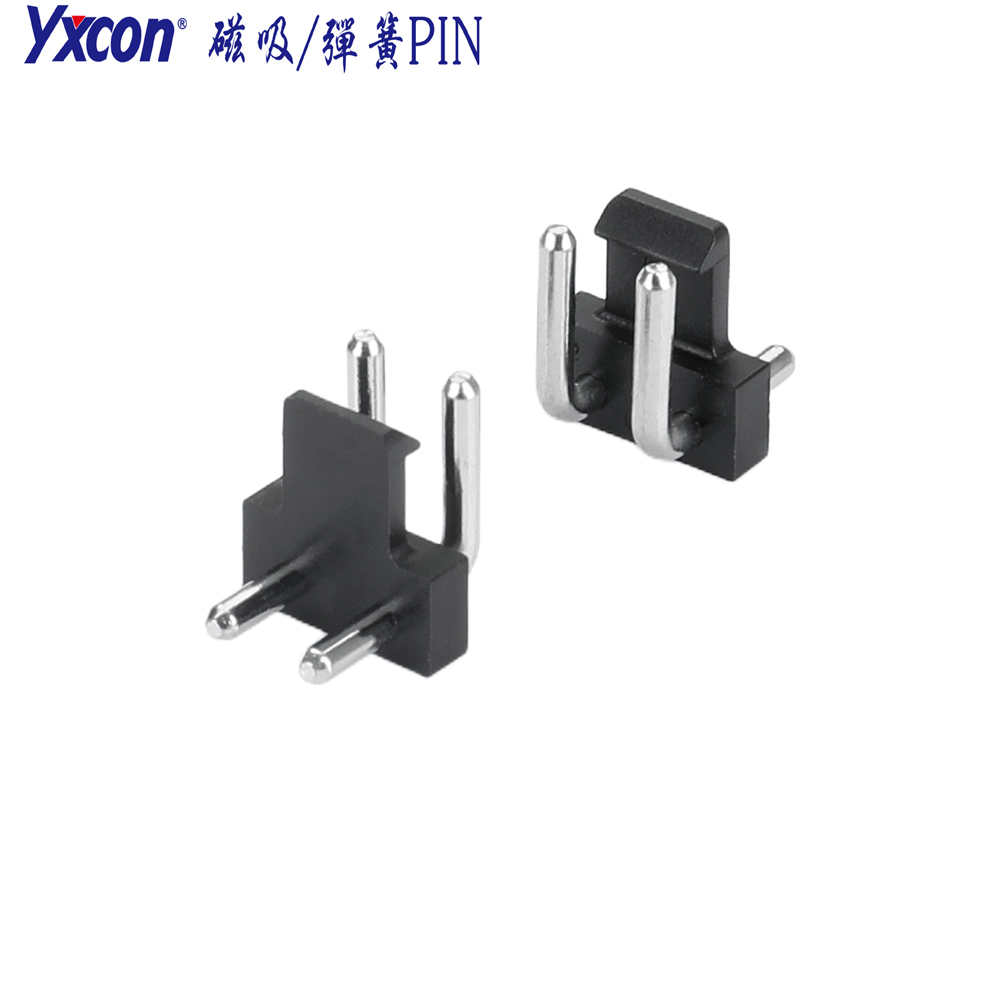
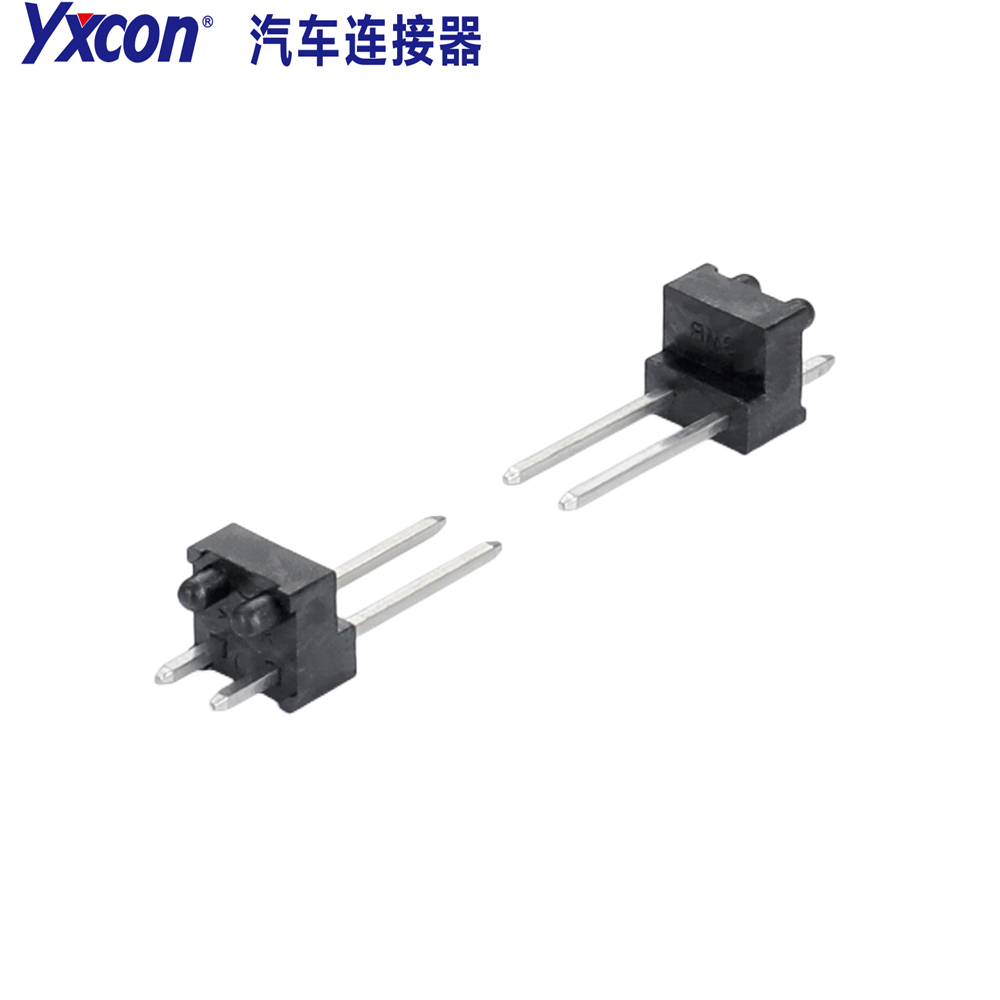
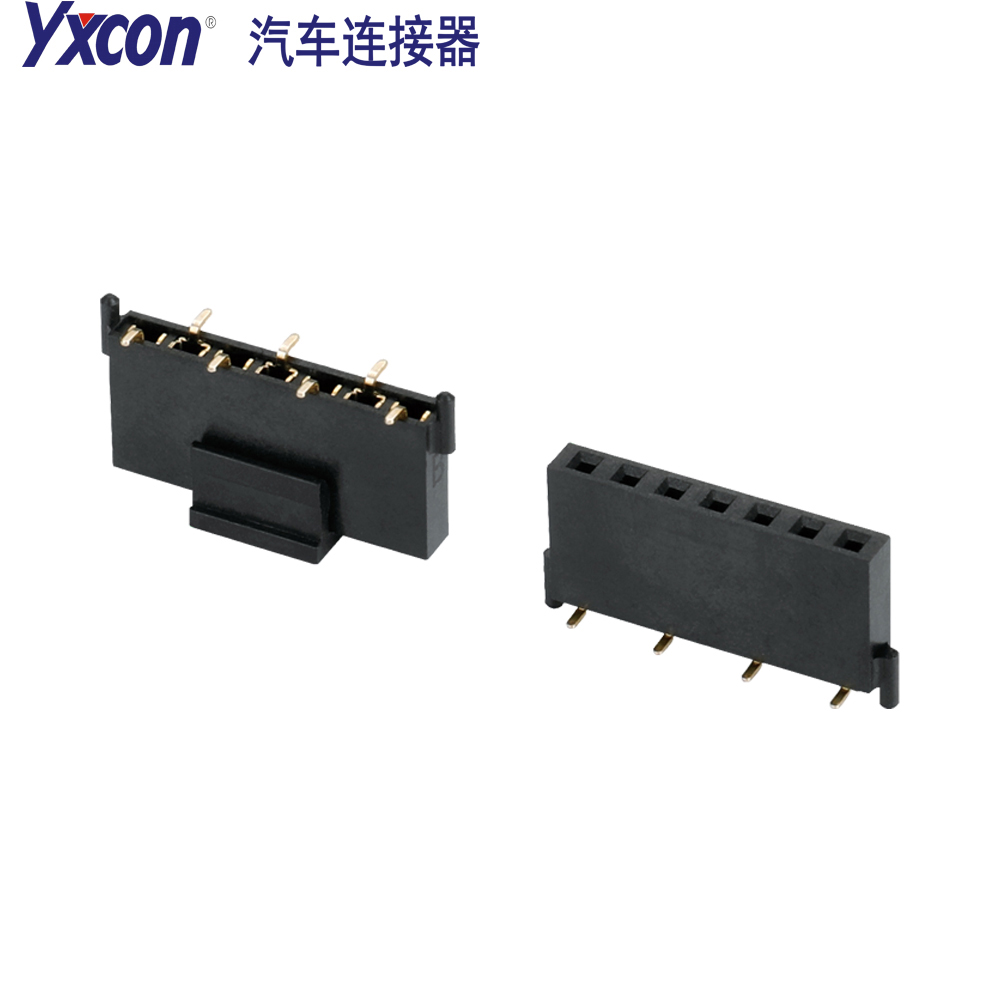
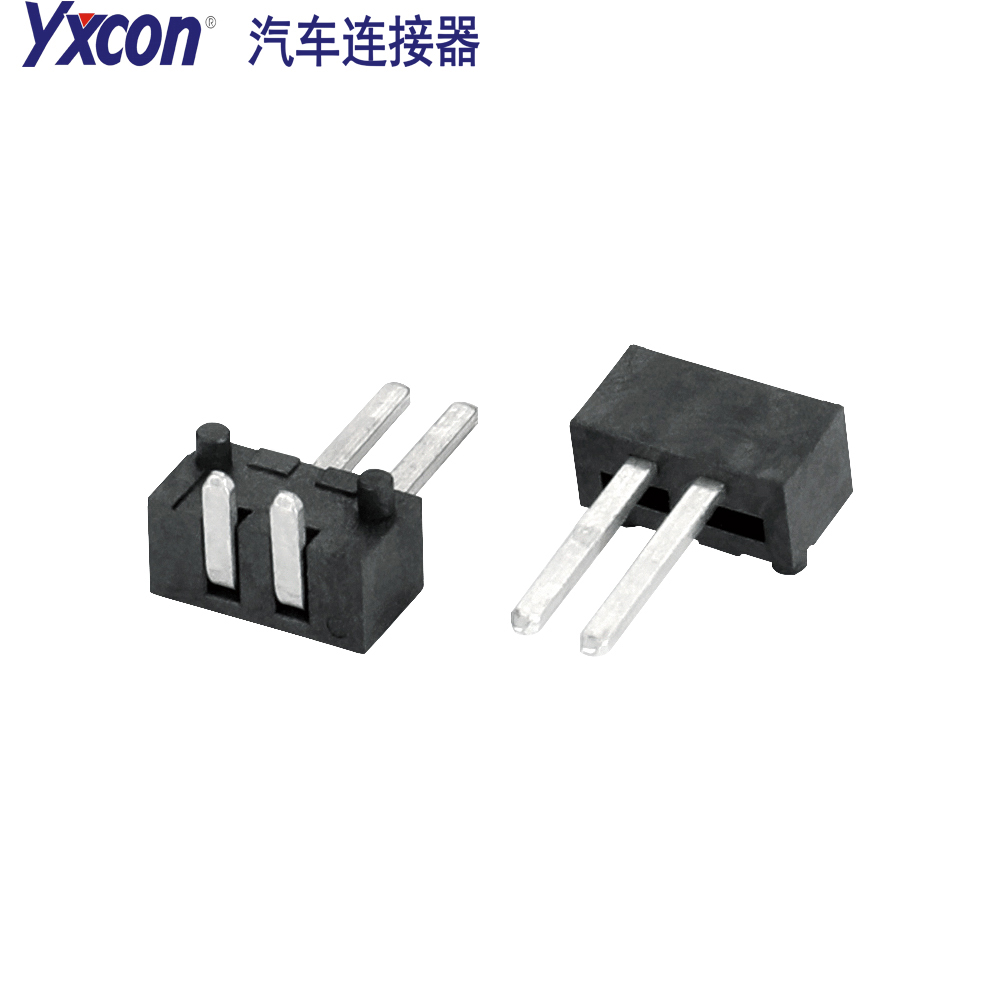
This 2.54 pitch 90-degree right-angle flat pin connector is specially designed for automotive precision circuits and supports flexible 1 to 2-pin configurations. Its vertical bent-pin structure can greatly save internal space in automotive electronic equipment and meet the needs of compact circuit layouts. As an important type of automotive flat pin connector, this product plays a key role in signal transmission and power connection in automotive circuit systems.
In terms of materials and electrical parameters, the plastic material of this connector is HIGHT-TEMP, which can adapt to the complex high-temperature environment inside automobiles. The terminal material is brass, ensuring good electrical conductivity and mechanical strength. Its rated current is 2.0 AMP, rated voltage is 24V, withstand voltage reaches AC 500V/minute, contact resistance is 30mΩ maximum, insulation resistance is 2000MΩ minimum, and the operating temperature range covers -40°C to 105°C. These parameters jointly ensure the stable operation of the product under automotive working conditions.
Preparation Before Use
Before operating the automotive connector, it must be confirmed that the working environment meets the product's operating temperature requirements, that is, the ambient temperature must be between -40°C and 105°C. At the same time, check whether the rated voltage of the circuit system to be connected does not exceed 24V and whether the rated current does not exceed 2.0 AMP, so as to avoid connector overload damage caused by parameter mismatch.
Prepare suitable tools and accessories, and ensure that the selected 1-pin flat pin or 2-pin flat pin matches the connector's pin count configuration. Since the product is designed with 2.54 pitch flat pins, it is necessary to confirm that the pitch of the matching connection components is also 2.54mm, to prevent pin deformation or poor contact caused by pitch deviation. In addition, the operation area must be cleaned in advance to avoid dust, oil stains, and other impurities adhering to the connector surface and affecting contact performance.
Connector Installation Steps
Step 1: Align the pins of the 1-pin flat pin or 2-pin flat pin with the insertion holes of the automotive flat pin connector, paying attention to matching the direction of the pins and holes to avoid bending the pins due to forced insertion. Since this product is designed with 90-degree flat pins, during insertion it is necessary to ensure that the vertical direction of the bent pins is consistent with the layout direction of the circuit board or connection components, making full use of its space-saving structural advantage.
Step 2: Use a dedicated tool to gently press the pins so that they enter the connector smoothly until the pins are fully inserted into place. During pressing, keep the force even to avoid deformation of the brass terminals or damage to the plastic housing caused by excessive force. After insertion is complete, gently pull the pins to check whether the connection is firm and ensure there is no looseness.
Step 3: After completing pin installation, secure the connector as a whole in the designated position of the automotive circuit, ensuring that the bend of the 90-degree flat pins is not subjected to external pressure. When securing, use fasteners compatible with the HIGHT-TEMP plastic material to avoid chemical reactions between materials that could affect product performance.
Electrical Performance Testing Steps
Step 1: Use a multimeter to test the contact resistance of the connector and ensure that its value does not exceed the maximum of 30mΩ. During testing, place the multimeter probes in contact with the metal parts of the pins and corresponding insertion holes respectively, and read the value after maintaining stable contact. If the value exceeds the standard, recheck the pin insertion depth or whether the terminals are damaged.
Step 2: Conduct an insulation resistance test. Use an insulation resistance tester to apply the specified voltage and check whether the measured value reaches the minimum of 2000MΩ. During the test, ensure that the connector is isolated from surrounding conductive parts to avoid test errors. If the insulation resistance does not meet the standard, check whether the plastic housing has cracks or adhered impurities.
Step 3: Conduct a power-on test under the rated voltage of 24V, observe the working state of the connector under the rated current of 2.0 AMP, and confirm that there is no overheating, sparking, or other abnormal phenomena. The test duration shall be no less than 5 minutes, during which the temperature changes of the connector must be continuously monitored to ensure stable operation within the operating temperature range.
Safety Operation Precautions
During operation, it is strictly prohibited to use the connector beyond its rated parameters, that is, the voltage must not exceed 24V and the current must not exceed 2.0 AMP, to avoid safety hazards caused by overload. Since the withstand voltage parameter is AC 500V/minute, it is prohibited to use it in circuit environments exceeding this withstand voltage value to prevent breakdown accidents.
When operating in a low-temperature environment of -40°C, pay attention to possible brittleness changes in the HIGHT-TEMP plastic material, and avoid striking or dropping the connector forcefully. When the operating temperature reaches the upper limit of 105°C, ensure that there is sufficient heat dissipation space around the connector to prevent performance degradation caused by heat accumulation.
Warning: Do not apply unverified lubricants or cleaning agents to the connector surface, to avoid corroding the brass terminals or damaging the insulation performance of the plastic material. If oxidation is found on the pins, use a dedicated electronic cleaner for treatment, and reinstall and use only after treatment.
Daily Maintenance and Storage Requirements
Regularly inspect the pin condition of the automotive flat pin connector to check for deformation, oxidation, or looseness. For connectors configured with 1-pin flat pins and 2-pin flat pins, inspect the contact condition of the corresponding pins separately to ensure there is no circuit interruption caused by poor contact. The inspection cycle is recommended to be determined according to the frequency of automotive use; in high-frequency use scenarios, the inspection interval should be shortened.
When storing the connector, place it in a dry and ventilated environment, avoiding direct sunlight and high-temperature baking. When the storage temperature is outside the operating temperature range of -40°C to 105°C, temperature control measures must be taken to prevent changes in material performance. Connectors with different pin counts must be stored separately to avoid pin deformation caused by mutual collision.
For connectors not used for a long time, apply a small amount of rust preventive protective agent to the pin surface and seal them in an anti-static bag. Before reuse, remove the protective agent and test the electrical performance, and put them into use only after confirming that they meet the requirements of contact resistance 30mΩ Max and insulation resistance 2000MΩ Min.
Expected Results After Completing Operations
After correctly completing the above operations, the 2.54 pitch flat pin connector should be able to operate stably in automotive precision circuits. Its 90-degree flat pin structure effectively saves internal space, and the flexible 1 to 2-pin configuration meets different circuit connection needs. The connector's brass terminals and HIGHT-TEMP plastic material work together to maintain reliable electrical performance within the temperature range of -40°C to 105°C.
In terms of electrical parameters, the connector should meet the working requirements of rated current 2.0 AMP and rated voltage 24V, the standard of withstand voltage AC 500V/minute, contact resistance not exceeding 30mΩ, and insulation resistance not lower than 2000MΩ. The entire connection process has no safety hazards, and the connector is firmly installed with good contact, capable of long-term stable signal transmission and power connection tasks in automotive circuits.


